Is Boiling Water Better Than Using an RO Purifier?
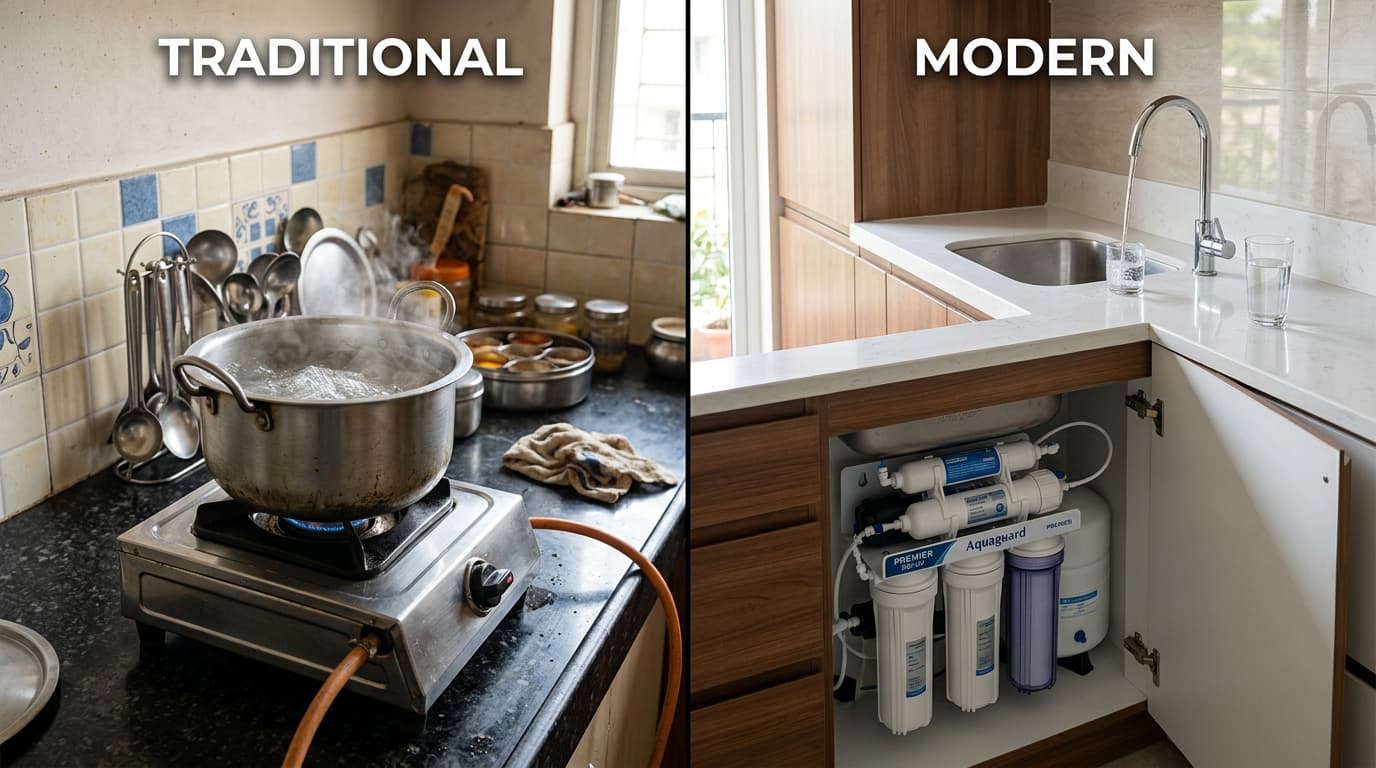
Boiling water before drinking was standard practice in most Indian households just a decade ago. And it's still reliable — but only partially. Here's an honest comparison:
What Boiling Water Does Well
Boiling water at 100°C kills virtually all disease-causing bacteria, viruses, and protozoa. It's highly effective against typhoid, cholera, dysentery, and most waterborne infections caused by biological agents. The process is simple and requires no equipment investment.
What Boiling Cannot Do
This is where boiling falls dangerously short:
- Dissolved Salts & Heavy Metals: Boiling does not remove lead, arsenic, fluoride, nitrates, or dissolved salts. In fact, as water evaporates during boiling, the concentration of these minerals increases.
- Chlorine and Chemical Contaminants: Municipal water is treated with chlorine. Boiling removes some chlorine but leaves chlorine by-products (trihalomethanes) which are potential carcinogens.
- Pesticides and Industrial Contaminants: India's groundwater is increasingly contaminated with agricultural chemicals. Boiling has zero effect on these.
The Verdict
If your water source is relatively clean municipal water, boiling is a reasonable safety net for biological contamination. But for areas of Pune with high TDS or groundwater sources, an RO purifier is not optional — it's essential. For comprehensive protection, RO+UV is the gold standard.