The Role of Copper and Zinc in Modern Water Purifiers
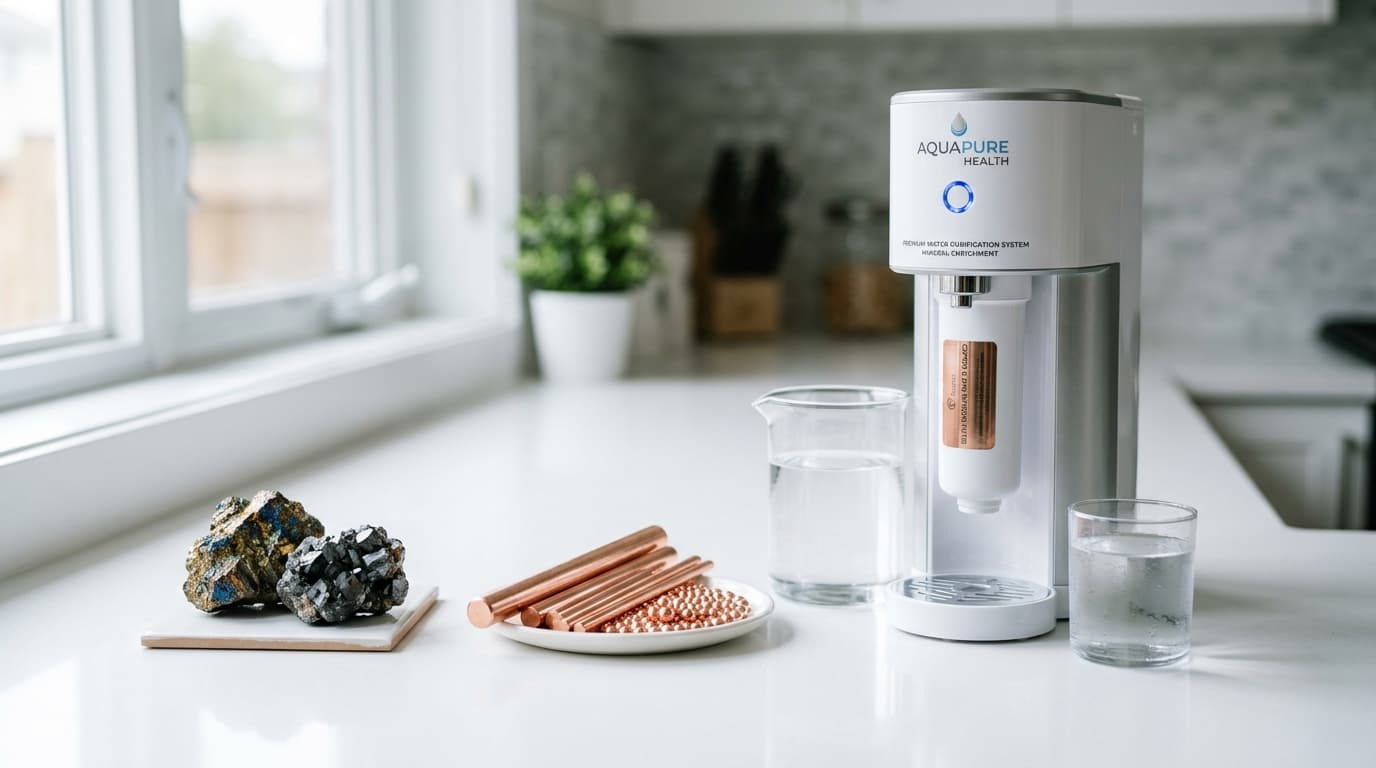
One of the criticisms leveled against RO water purifiers is that they remove not just harmful contaminants but also beneficial minerals like calcium and magnesium. In response, several modern purifiers now include a copper or zinc enrichment cartridge as the final polishing stage. Here's the science.
Why Minerals Matter
Natural spring water contains dissolved minerals that give it a pleasant taste and contribute to daily nutritional intake. Pure RO water with TDS below 50 ppm is essentially demineralised and tastes flat. Studies suggest that long-term consumption of demineralised water may have marginal effects on mineral absorption.
The Copper Advantage
Copper has been used for water storage in India for centuries. Modern purifiers with copper cartridges release trace amounts of copper ions (0.2–2 mg/L) into the water. Copper is an essential trace mineral that supports immune function, collagen synthesis, and iron absorption. It also has natural antimicrobial properties.
Zinc Enrichment
Zinc cartridges work similarly, releasing trace zinc into purified water. Zinc is critical for immune health, wound healing, and enzyme function. Deficiency is common in Indian diets.
Is It Worth It?
Copper and zinc enrichment adds approximately ₹800–₹1,500 to the cost of a purifier. While the mineral contribution is modest compared to food sources, the psychological benefit and slight improvement in taste are real. If you are already considering a premium purifier, look for models with a TDS controller or mineral enhancer cartridge.